More than a concert accessory, uniquely designed K-pop light sticks become symbol of identity and devotion
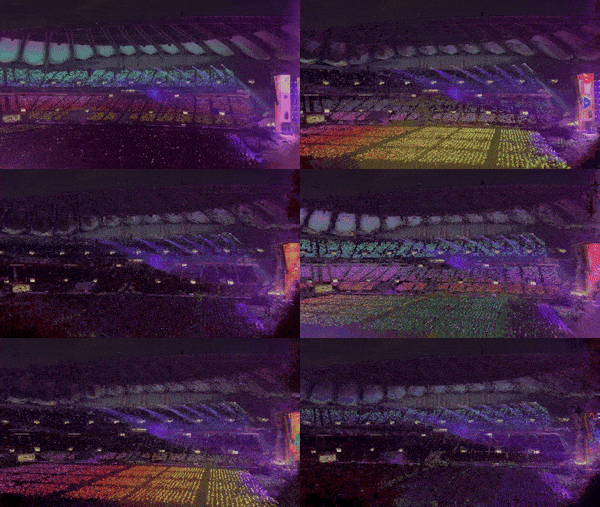
If you're an avid K-pop fan, there's a good chance you have a light stick glowing on your shelf. But even the uninitiated have likely seen pictures of the light sticks that emit vibrant colors and patterns at concerts, fan events and music festivals.
K-pop artists each have their own "bong" -- the Korean word for stick -- and it's more than a gleaming accessory. Light sticks reflect a group's official fandom color, logo, theme, identity or a special symbol that represents and connects with their fans.
Light sticks trace their roots to the mid-to-late 1990s, when first-generation K-pop idols like H.O.T., Sechskies and g.o.d. rose to stardom. Fans back then, instead of carrying the light sticks we see today, rallied behind their stars with balloons.
Each fandom had its own signature color -- white for H.O.T., sky blue for g.o.d and yellow for Sechskies -- to differentiate itself from other fandoms. To show unity, concert venues would fill up with these colored balloons, creating a vivid display of support that paved the way for today's light stick culture.
The first uniquely designed K-pop light stick is credited to Se7en, who debuted in 2003 under K-pop powerhouse YG Entertainment. Reflecting his name, the singer created a custom light stick shaped like the No. 7, which he called the "Chilbong," meaning "seven stick."


No comments:
Post a Comment